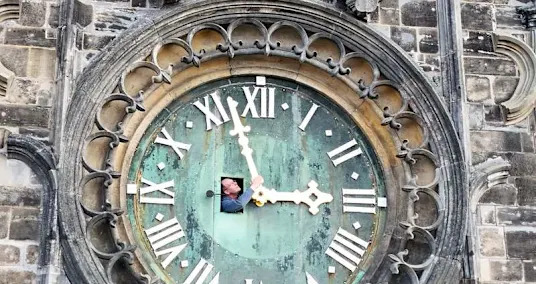
Clocks across the majority of European countries are set to go forward by one hour early on Sunday as the continent moves to daylight saving time, also known as summer time.
Clocks in most European nations including Germany advance by one hour at 2 am (0100 GMT) to 3 am, heralding longer evenings and brighter days.
This means that for the coming months parts of Europe will be on Central European Summer Time (CEST), before moving back to Central European Time (CET) in the autumn, when clocks go back again by an hour on October 25.
The aim of the change is to make better use of daylight in the shorter days of the winter in the northern hemisphere.
The signal for the automatic changeover of the clocks in Germany comes from the Federal Institute of Physics and Metrology (PTB) in the northern city of Braunschweig, also known as Brunswick in English.
The institute's experts ensure that radio-controlled clocks, station clocks and many industrial clocks are supplied with the signal via a long-wave transmitter called DCF77 in Mainflingen near Frankfurt.
latest_posts
- 1
 FDA adds strongest warning to Sarepta gene therapy linked to 2 patient deaths
 - 25 Family SUVs for 2024: Which One Accommodates Your Family's Needs\uff1f
- 3Flu season is ramping up, and some experts are "pretty worried"
- 4Kenmore East reacts to their best overall delegation award at WNY Model United Nations General Assembly competition
- 5Remarkable Spots for Hot Air Swelling All over The Planet


- Hilary Duff releases 'Mature,' her 1st song in 10 years
- Vote in favor of the Web-based Work out schedule to Keep You Fit and Sound
- Unsold Rams May Be Less expensive Than You Suspect
- Find the Insider facts of Viable Advertising: Building a Positive Brand Picture
- People with depression can treat themselves at home with new device
- RFK Jr. guts the US childhood vaccine schedule despite its decades-long safety record
- Little Urban areas to Visit in Western Europe
- From Loner to Force to be reckoned with: Individual Accounts of Change
- 7 Well known Vacation spots In The US


