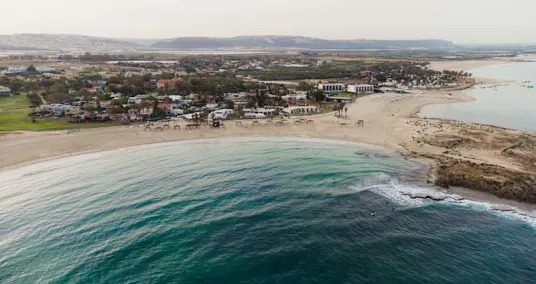
The discovery was made in an ancient shipwreck in the Dor Lagoon near the Carmel Coast, where archaeologists recovered nine pieces of unprocessed iron known as “blooms.”
Researchers from the University of Haifa said Wednesday that an underwater excavation off Israel’s northern Mediterranean coast uncovered what they described as the earliest known cargo of raw iron transported by ship, dating back around 2,600 years, Xinhua reported.
The discovery was made in an ancient shipwreck in the Dor Lagoon near the Carmel Coast, where archaeologists recovered nine pieces of unprocessed iron known as “blooms.” According to the university, the find provides direct evidence of how iron was transported in its earliest commercial stages.
The material was preserved in its original form, having solidified directly in a smelting furnace without undergoing forging or further refinement. Researchers said this distinguishes the cargo from later iron artifacts that typically show signs of shaping or tool-making.
Unlike copper and bronze, which could be melted into liquid form in ancient production processes, iron was heated with charcoal to produce a solid, porous mass. That mass was generally hammered to remove impurities and create denser material suitable for tools and implements.
The recovered blooms showed no indication of that secondary processing stage, suggesting they were transported immediately after production.

Earliest iron shipment discovered in ancient Mediterranean wreck
To determine the age and condition of the cargo, researchers conducted microscopic and chemical analyses.
Radiocarbon dating was also carried out on charred wood embedded in one of the pieces, helping confirm the timeline of the shipment. The findings were published in the journal Heritage Science.
Researchers said the cargo indicates that iron was being moved in raw form from production sites to other locations for further processing, pointing to a level of specialization in ancient manufacturing and trade networks in the Mediterranean.
The University of Haifa said the discovery provides new insight into early iron production and distribution practices in the region.
latest_posts
- 1
 Agios Pharma shares jump as US FDA expands approval for its blood disorder drug
- 2Extravagance SUVs for Seniors: Solace, Innovation, and Security
- 3Amateur's Manual for Venture Strategies for Tenderfoots
- 4Fetterman says he's back home after a fall put the Pennsylvania senator in the hospital
- 5New peace laureate: Iran's arrest of Mohammadi 'confession of fear'


- The Development of Shipping: Controlling Towards a More Associated Future
- 'Everyone in this prison has had family killed or shot'
- Muslim nations condemn new Israeli death penalty law
- Clones of Stumpy, Washington D.C.'s beloved cherry blossom tree, have flowered for the first time
- ACA subsidies latest: Making sense of what's happening with health care after Republicans revolt, forcing a vote on funding extension
- 5 Different ways Macintosh is Prepared to Overwhelm Gaming, Even Against Windows
- The Force of Care: Living with Goal
- Europe: 4 Urban communities for a Paramount Social Experience
- 74 suicide warnings and 243 mentions of hanging: What ChatGPT said to a suicidal teen