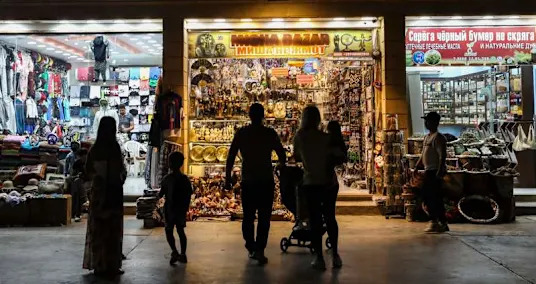
Egypt has moved to calm tourists nerves over scaled-back opening hours of shops and restaurants due to the war in Iran, after the country announced it would enforce an earlier closing time due to the oil crisis.
Egypt's large-scale energy-saving measures are not intended to apply to popular travel destinations such as Hurghada, Marsa Alam, Luxor, Aswan and Sharm El Sheikh, the tourism ministry said as the rules took effect at the end of March.
To save energy, cafés, restaurants, bars and shops in Egypt will close at 9 pm for at least a month, or at 10 pm on Thursdays and Fridays. The government announced the move in response to sharply rising energy costs as a result of the Iran war.
In central areas of Cairo and in popular holiday resorts, many shops, bars and restaurants typically stay open until around 1 am or 2 am, allowing locals and tourists to enjoy milder evening temperatures.
This is set to remain the case in certain areas, and the exemption also applies to restaurants popular with tourists, including in the capital Cairo.
The aim is to continue ensuring a high standard of service and security regardless of the measures, the tourism minister said in a statement.
The announced measures had triggered concerns among tourists. "If things stay like this, I might as well stay at home," one user wrote in a Facebook group for German holidaymakers in Hurghada. "Tourism will be harmed more than helped," another wrote.
Energy prices have risen as a result of renewed conflict in the Middle East. Iran responded to attacks from the US and Israel by effectively closing the Strait of Hormuz, a key shipping route for global oil and gas supplies.
The government in Cairo hopes to counter its natural gas shortage by reducing electricity consumption. Egypt generates more than 80% of its electricity from natural gas, much of which is imported. The most important gas supplier, Israel, stopped exports to Egypt when the war began more than four weeks ago.
The measure is initially set to last one month and may be extended depending on how the war develops.


 An Extended period of Voyaging Carefully: the World with Reason
- What do scientists hope to learn from NASA's historic Artemis 2 moon flyby?
- Ober Gabelhorn glacier reveals remains of man missing for over three decades
- Artemis 2 astronauts are about to see one of the rarest skywatching sights of all — a solar eclipse from beyond the moon
- Remain Fit: Powerful Wellness and Work-out Schedules for a Better You
- Vial marked 'Polonium 210' sparks scare during German Easter egg hunt
- Iran fires one of largest barrages in weeks ahead of Passover
- The Way to Recuperation: Defeating Dependence
- 'Senseless violence' erupts at Christmas tree lighting; 4 injured